Google DeepMind Introduces SynthID Bio Watermarking for Synthetic Biology
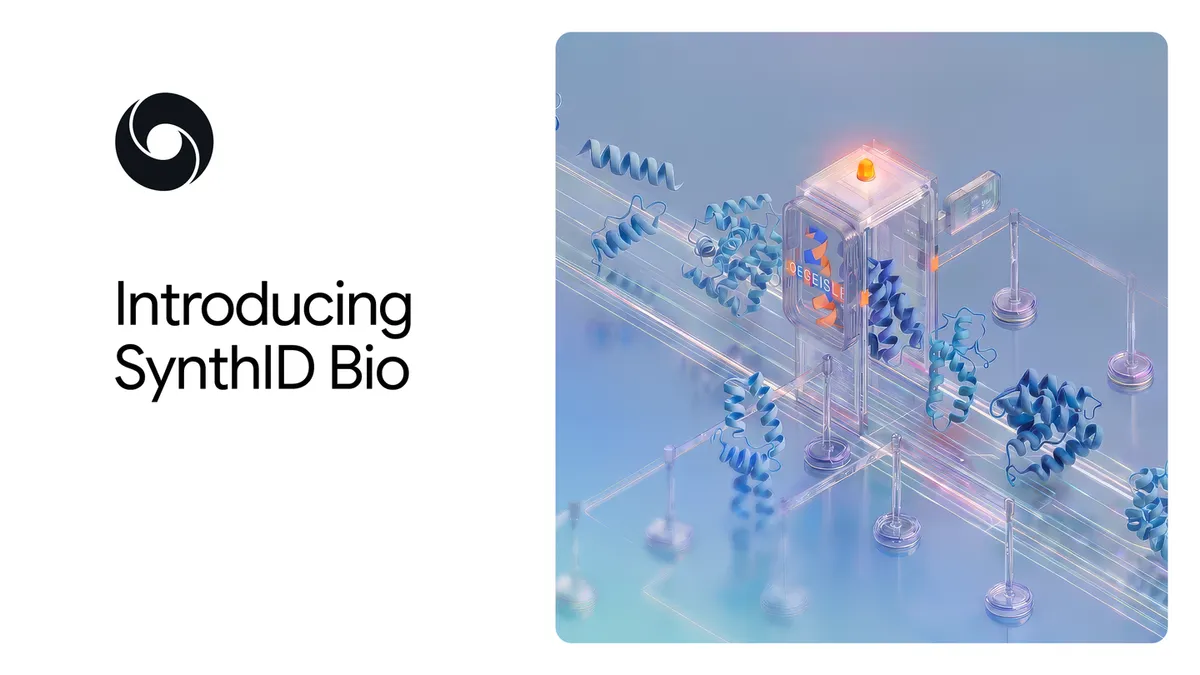
Image: blog.google
Google DeepMind announced SynthID Bio on September 30, 2026, extending its watermarking technology to synthetic biology. The system is designed to embed a verifiable watermark into AI-designed proteins while preserving their biological function.
How SynthID Bio works
According to Google, the watermark is embedded directly into biological designs, including AI-generated protein sequences and predicted three-dimensional structures. The company describes the watermark as imperceptible: it is intended to identify a design’s provenance without compromising its biological usefulness.
What the tests showed
Google reports that laboratory tests across the target proteins found that watermarked designs matched the performance and natural diversity of unwatermarked versions. The announcement also presents comparisons of binding affinity for three targets: PD-L1, SC2RBD and VEGF-A.
These findings should be understood within the scope of the reported tests. They do not establish that every protein design or application will behave identically after watermarking.
Why provenance matters
Google positions SynthID Bio as a way to strengthen biosecurity and help preserve the integrity of open scientific databases. Its proposed role is to make the origins of AI-designed biological material more traceable as researchers create and share these designs.
Source: Google’s SynthID Bio announcement.
Related AI News
Enjoyed this? Get more in your inbox.
Weekly AI breakthroughs, tool reviews, and practical guides.