Claude Answered a Physicist’s Public Challenge, and It Cost $100 of Compute
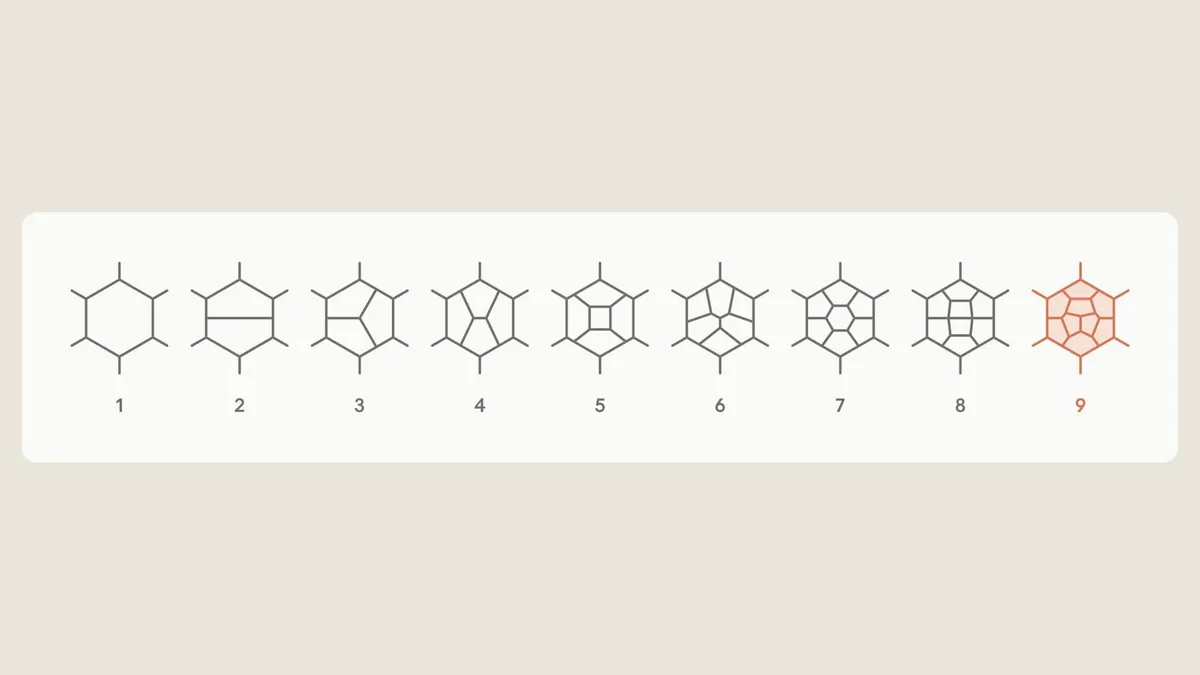
Image: anthropic.com
A science writer set a public challenge, and Anthropic answered it. Matt von Hippel, a former theoretical physicist who blogs at 4gravitons.com, asked AI companies to show a model could solve a real particle-physics calculation using ordinary academic computing resources, offering two targets: N=8 supergravity to seven loops, or N=4 super Yang-Mills to nine.
Anthropic took the second. According to Anthropic’s write-up, physicists Liam Fitzpatrick and Siddharth Mishra-Sharma used Fable 5.1 inside Claude Science to compute the six-particle scattering amplitude in planar N=4 super Yang-Mills to nine loops.
For scale: most formulas in scattering amplitude theory have only been worked out to two or three loops. N=4 super Yang-Mills is the field’s simplified test case, easier than the real thing because every particle comes with four supersymmetric partners, and physicists attack it with bootstrap techniques — testing candidate formulas against constraints until only one survives.
The instructions given to the model are worth noting for how mundane they are. It was told to compute the amplitude, to keep working while nobody was watching, and to report back every four to six hours.
It finished by two independent routes: a direct bootstrap and an indirect form-factor method. The bootstrap ran in Python with SymPy, on 96 CPUs for a week, consuming $100 of budget. Anthropic estimate an outside user running either approach to completion would spend one or two thousand dollars — which is the point of the original challenge, since a result that needs a national laboratory proves something different from one that needs a grant-sized budget.
It was also not the only answer. Shortly after Anthropic finished, Song He, an amplitudes specialist at the Chinese Academy of Sciences in Beijing, obtained most of the same result with help from GPT-6. The formulas themselves now go to human researchers to publish and analyse.
Related AI News
Enjoyed this? Get more in your inbox.
Weekly AI breakthroughs, tool reviews, and practical guides.